
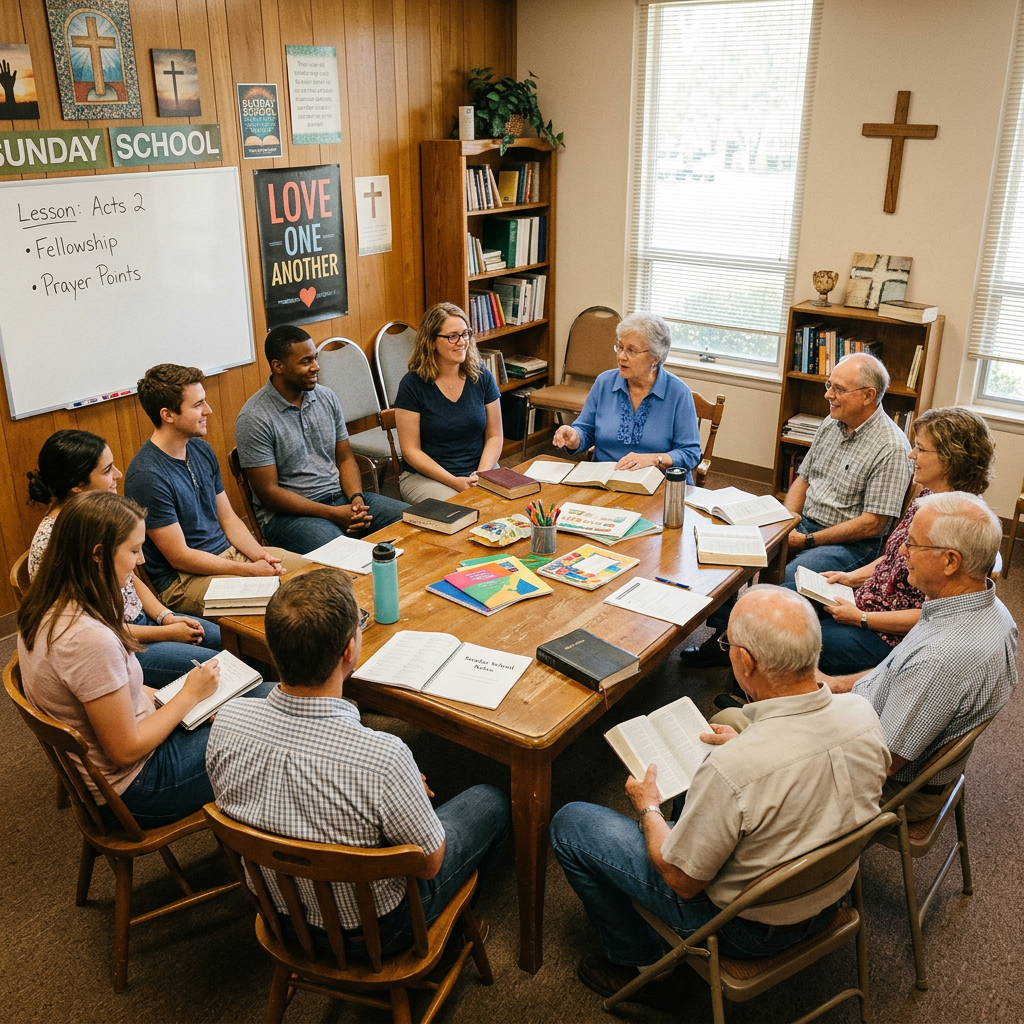
Churches often celebrate big numbers in their Bible study ministries—but bigger isn’t always better. In fact, one of the healthiest patterns for long‑term discipleship is a group that averages 12 to 16 people in attendance, supported by a ministry list of around 30. That may sound small to some and too large to others, but this mid‑size model strikes a powerful balance between intimacy, accessibility, and sustainability. When groups stay right‑sized, leaders thrive, members stay connected, and churches experience healthier growth.
Here are three reasons why keeping your group in this range strengthens your ministry.
1. Right‑Sized Groups Create Space for Real Relationships
People join Bible study groups for teaching, but they stay because of relationships. A group with 12 to 16 people in the room is large enough to offer diversity—different ages, backgrounds, and perspectives—but small enough for genuine connection.
This size allows:
- Everyone to be known. No one disappears into the crowd. Leaders can learn names, stories, and spiritual needs.
- Balanced participation. Discussions don’t stall because only two people talk, nor do they become chaotic with too many voices competing.
- Natural care. When someone is absent, struggling, or celebrating, the group notices. Care happens organically.
A ministry list of around 30 supports this relational strength. Not everyone attends every week—life happens. But maintaining a larger list ensures a steady flow of people, guests, and returning members without overwhelming the group dynamic. It’s the perfect blend of stability and openness.
2. Right‑Sized Groups Encourage Healthy Engagement and Spiritual Growth
Teaching is most effective when people can interact with Scripture, ask questions, and wrestle with truth together. A group of 12 to 16 creates the ideal environment for engagement.
This size supports:
- Meaningful discussion. There’s enough variety to enrich the conversation but not so much that leaders lose control of the room.
- Safe vulnerability. People are far more willing to share prayer needs, doubts, and struggles when the group feels personal rather than crowded.
- Shared ownership. Members can take on roles—hospitality, prayer, outreach, care—without feeling like the group is too big for their contribution to matter.
A ministry list of 30 also helps groups stay spiritually vibrant. It ensures a mix of regulars, semi‑regulars, and newcomers, which keeps the group from becoming stagnant or insular. New voices bring fresh questions, new stories, and new opportunities for discipleship.
3. Right‑Sized Groups Are Sustainable for Leaders and Scalable for Churches
Healthy groups don’t just grow—they multiply. And multiplication is far more likely when groups stay within a manageable size. A group that averages 12 to 16 people is large enough to feel successful but small enough to be led without burnout.
This size allows leaders to:
- Prepare effectively. Managing discussion, prayer needs, and follow‑up is realistic—not overwhelming.
- Identify future leaders. Mid‑size groups naturally surface people with teaching, shepherding, or hospitality gifts.
- Maintain quality. Leaders can focus on teaching Scripture well rather than crowd control.
- Cast vision for multiplication. New groups don’t just happen…they are encouraged and expected to launch.
A ministry list of 30 also creates a natural pipeline for multiplication. As attendance consistently pushes past 16, leaders can begin mentoring new teachers and preparing to launch a second group. This keeps groups healthy, prevents overcrowding, and expands the church’s discipleship reach.
Also, a mid-sized group doesn’t feel intimidating to a new potential group leader. Try asking someone in your pipeline to lead a group that averages 40-50+ people! You’ll get some blank stares and “cricket cricket” moments. A smaller group feels doable to a new leader, and they don’t feel like they are being thrown into a pool at the deep end.
Right‑sized groups—12 to 16 in attendance, supported by a ministry list of around 30—are relationally rich, spiritually engaging, and organizationally sustainable. They create environments where people grow, leaders thrive, and churches multiply. In a culture that often equates “bigger” with “better,” wise churches recognize that the healthiest discipleship happens in groups that are intentionally, strategically, and lovingly kept at the right size.

