
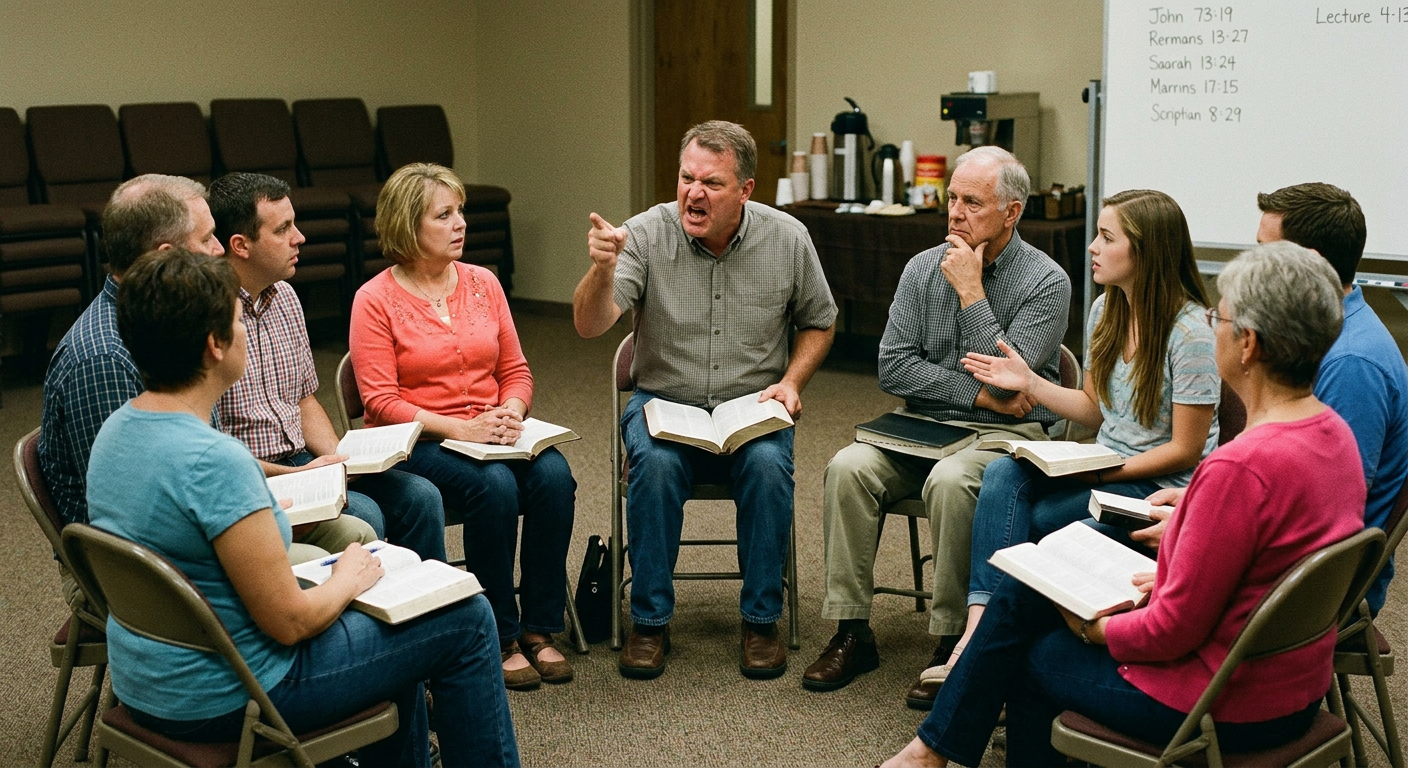
Every Bible study leader eventually faces a moment when someone — or several someones — disrupt the group. Maybe a person (or persons) dominate every discussion, dismiss others’ comments, or challenge the leader in ways that feel disrespectful. When this happens, the group’s spiritual growth stalls, tension rises, and quieter members withdraw because they are uncomfortable with the conflict. The good news: Scripture gives us a clear path forward. Handling difficult people isn’t easy, but it is possible — and it can even strengthen your group when done well.
Below are three practical steps to confront disruptive behavior and help your group move forward with unity and purpose.
1. Clarify Expectations and Protect the Purpose of the Group
Before confronting anyone individually, reaffirm the purpose of your Bible study. A group exists to help people grow in Christ, not to provide a stage for personal opinions or power struggles. Leaders must protect that purpose.
An gentle but firm reminder at the beginning of meetings every once in a while can reset the tone: “Today, let’s make space for everyone. We want to hear from each person who has something to contribute.” Or you might say something like, “Just a reminder that whenever we gather for Bible study, it’s OK to disagree, but not to the point it becomes disruptive or divisive. Our goal is to grow together in Christ, and that requires mutual respect, a listening ear, and giving others the benefit of the doubt.”
This isn’t about shaming anyone — it’s about shepherding the whole flock. Scripture consistently calls leaders to guard the unity of the body (Ephesians 4:1–3). When expectations are clear, disruptive behavior becomes easier to address because the standard has already been set.
If needed, introduce simple guardrails: time limits for comments, rotating who answers first, or structured discussion questions. These tools help balance participation without singling anyone out.
2. Address the Behavior Privately, Directly, and Biblically
When disrespect or dominance continues, it’s time for a private conversation. Matthew 18 gives us a model: go to the person individually first. This conversation should be pastoral, not punitive — but it must be clear.
A helpful framework:
- Affirm their value: “I appreciate your passion for Scripture.”
- Describe the issue: “But your comments often shut others down or challenge group members in ways that feel disrespectful.”
- Explain the impact: “Several members have stopped sharing because they feel overshadowed. It’s even causing some people to withdraw.”
- Call them higher: “I’m asking you to help me create space for others. Your leadership can be a blessing if it’s used to build up, not dominate.”
Most people respond well when they understand the impact of their behavior. If they don’t, you still have taken a biblical step toward restoration.
If the behavior continues, Matthew 18 allows for a second step: bring another leader or elder into the conversation. This isn’t escalation — it’s accountability. At this time, a warning should be issued. “I want you to continue coming to our group, but if your behavior continues, I’ll have to ask you not to attend for the benefit of the entire group. I love you, and that’s not something I want to do, but I must protect unity and guard against disunity.”
3. Lead the Group Forward with Confidence and Consistency
Once the conversation has happened, the leader must guide the group with renewed clarity. Difficult people often test boundaries, so consistency is key. Continue using balanced discussion practices, affirming quieter voices, and redirecting dominant ones with grace:
“Let’s pause there — I want to hear from someone who hasn’t shared yet.”
This is not rude. It’s leadership.
If the disruptive members respond positively, celebrate it. If they resist, you may need to ask them to step out of leadership roles or even take a break from the group. Healthy groups require healthy participation, and protecting the flock is part of a leader’s calling (Acts 20:28).
The goal is always restoration, not removal — but restoration requires repentance and cooperation.
A Final Word to Leaders
Be sure to consider the needs of the disruptive person (or persons). Sometimes their behavior could be caused by physical or emotional struggles. – they don’t feel well and are not thinking correctly or responding rightly. At times, the bad behavior might even be generated from a place of spiritual struggle, and they are in need of biblical counseling by a professional. The disruptive person may be unintentionally signaling a need for help, so be pastoral, but don’t placate the person and ignore the behavior or the underlying reasons for it. Your group deserves better.
Confrontation is uncomfortable, but it is deeply biblical. Jesus confronted. Paul confronted. Healthy leaders confront — not to win arguments, but to guard unity, protect the vulnerable, and keep the group focused on Christ.
Handled well, even difficult people can become some of your strongest allies. And your group will thank you for leading with courage, clarity, and love.

